best time to see northern lights in norway
Chasing the Aurora Borealis, or Northern Lights, is a bucket-list adventure for countless travelers, and Norway stands as one of the world's premier destinations to witness this celestial spectacle. The dancing ribbons of green, purple, and pink light are a breathtaking display of solar particles colliding with Earth's atmosphere. However, their elusive nature means timing is everything. If you're planning a trip to see the Northern Lights in Norway, understanding the optimal season, months, and conditions is crucial for a successful hunt. This guide will break down the best time to see the Northern Lights in Norway, offering expert tips to maximize your chances under the Arctic sky.

The Prime Season: When to Go for the Northern Lights
The Northern Lights are a winter phenomenon in Norway. While solar activity occurs year-round, you need darkness to see them. Therefore, the core season runs from late September to late March. During this period, the long nights of the Arctic winter provide the necessary dark canvas for the lights to appear.
- Peak Months (December to February): These are the darkest months, with near-constant darkness above the Arctic Circle. This provides a massive window of opportunity each night (up to 20 hours of darkness in some areas). However, this is also peak winter, meaning the highest chance of cloud cover and the coldest temperatures.
- Shoulder Seasons (Late September-November & March): Many seasoned Aurora hunters favor these months. The nights are still very long, but the weather can be more stable than in deep winter. You also benefit from milder temperatures, more accessible roads, and the possibility of combining your trip with other activities like fall colors or early spring skiing.
- The Summer Months (April-August): Avoid this time for Aurora viewing. From mid-April onward, the Midnight Sun takes over, and the sky never gets dark enough to see the lights, even if they are active.
The Role of Solar Cycles and KP Index
Timing isn't just about the calendar. The Sun follows an approximately 11-year cycle of solar activity. We are currently in a period of increasing solar activity, heading towards the Solar Maximum predicted for 2025. This means the years 2024 and 2025 are exceptionally good for viewing, with a higher frequency of intense, widespread Aurora displays that can be seen further south in Norway.
To gauge the strength of a predicted Aurora, check the KP Index. This is a scale from 0 to 9 that measures geomagnetic activity.
- KP 0-2: Quiet. Best viewed deep within the Arctic Circle.
- KP 3-4: Active. Good displays in Northern Norway (Tromsø, Alta).
- KP 5+: Storm level. Spectacular shows, potentially visible in central Norway.

Choosing Your Norwegian Aurora Base: Location Matters
Where you go in Norway is as important as when. You need to be north of the Arctic Circle for a reliable chance.
- Tromsø: Known as the "Capital of the Arctic," it's the most popular base. It offers excellent infrastructure, numerous tour operators, and is directly under the Aurora Oval (the zone with highest probability). Best viewing period: October to March.
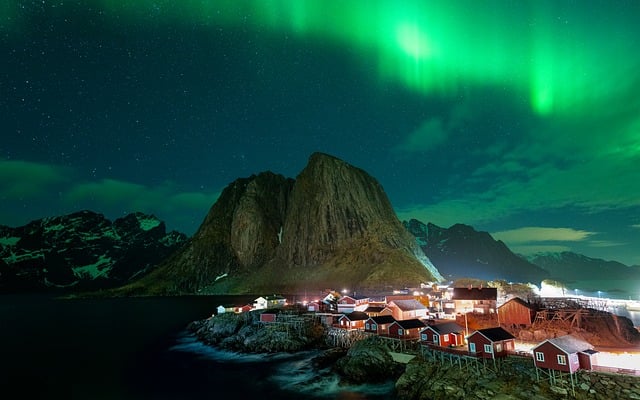
- The Lofoten Islands: Provides a stunning backdrop of dramatic mountains and fishing villages. The coastal climate can be milder but also cloudier. Best for photography. Prime time: September to April.
- Alta: Often called the "City of the Northern Lights," it boasts one of the world's first Northern Lights observatories. It has a dry, inland climate, which means more clear skies. Ideal from November to March.
- The North Cape (Nordkapp): Europe's northernmost point. Offers a powerful, remote experience. The season is similar, but extreme weather is more common.
- Svalbard: The extreme option. From late September to mid-March, it's dark enough. In fact, from mid-November to late January, it experiences the "Polar Night" with 24-hour darkness, offering a unique, round-the-clock Aurora potential.
Practical Tips for a Successful Aurora Hunt
Knowing the best time to see the Northern Lights in Norway is half the battle. Here’s how to seal the deal:
- Stay Multiple Nights: Never plan a one-night trip. Aim for at least 4-5 nights in your chosen location to statistically beat potential cloud cover.
- Escape Light Pollution: The lights are faint. You must get away from city lights. Join a guided tour—they know the best spots and monitor forecasts in real-time.
- Monitor the Forecast: Use apps and websites like the Norwegian Meteorological Institute (YR.no) for cloud cover and SpaceWeatherLive for Aurora forecasts.
- Dress for Success: This is a sub-zero winter activity. Wear thermal layers, a windproof and waterproof outer shell, insulated boots, and gloves. You will be standing still for long periods.
- Be Patient: Aurora watching is a waiting game. The show can start at any moment after dark and last for minutes or hours.
Frequently Asked Questions (FAQ)
Q: Can I see the Northern Lights in Oslo or Bergen? A: It is extremely rare. These cities are too far south. During a very powerful geomagnetic storm (KP 7+), it might be possible, but for a reliable experience, you must travel north of the Arctic Circle.
Q: What time of night is best to see them? A: The most active period is typically between 10:00 PM and 2:00 AM, but they can appear any time it is fully dark. Solar activity doesn't follow a clock.
Q: Do I need a tour guide, or can I self-drive? A: Both are possible. Guides provide expertise, transportation to optimal spots, and hot drinks. Self-driving offers flexibility but requires you to research locations, navigate winter roads, and interpret forecasts alone.
Q: What camera settings should I use to photograph the Aurora? A: You will need a DSLR or mirrorless camera with manual settings, a wide-angle lens (f/2.8 or lower), and a tripod. Start with: ISO 1600-3200, aperture f/2.8, and a shutter speed of 5-15 seconds. Adjust from there.
Q: Is there a "guarantee" to see them? A: No. The Northern Lights are a natural phenomenon. Reputable tour companies often offer a "guarantee" in the form of a free rebooking if you don't see them on your first tour—this underscores the importance of staying multiple nights.
Conclusion
The quest for the Northern Lights is a magical blend of science, patience, and awe. The best time to see the Northern Lights in Norway is undeniably during the dark winter months from late September to March, with the current ramp-up to the 2025 Solar Maximum making the 2024/2025 season particularly promising. By choosing a location well within the Arctic Circle like Tromsø or Alta, planning a multi-night stay, dressing appropriately, and patiently monitoring conditions, you dramatically increase your odds of witnessing one of nature's most magnificent performances. Remember, the journey under the vast, starry Arctic sky is an unforgettable experience in itself, with the Aurora as its potential, and often realized, grand finale.
Related Articles
Cover image coming soon
Best Time to Visit Thailand
Discover the best time for visit thailand. Complete guide with expert tips and data-driven insights.

best time to visit walt disney world in florida

when is the best time to go to costa rica
best time to visit redwood national park

best time to visit the galapagos islands
